Case study · Rules engine
Explainable job offer triage
A personal system that gathers job offers from public sources, standardises them and assesses them with rules that can be read and discussed. It does not send applications: it prepares a prioritised report and leaves every decision to a person.
The problem
Reviewing offers by hand always runs into the same problems:
- The decisive detail is not in the ad's fields: the salary appears in the text, mixed with the variable part, or not at all.
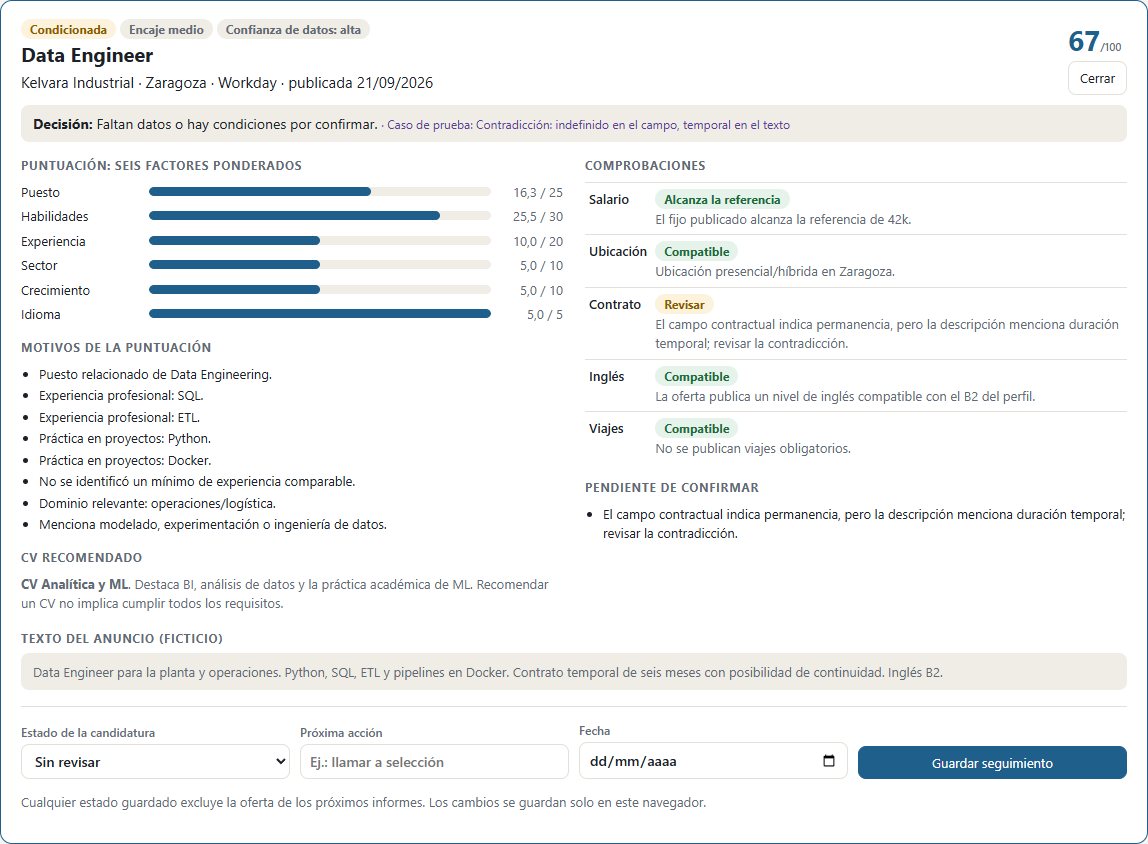
- The ad contradicts itself: “permanent” in the contract field and “six months” in the description.
- A “remote” ad only accepts residents of another country.
- The same offer arrives by several routes and shows up again after being rejected.
What it does
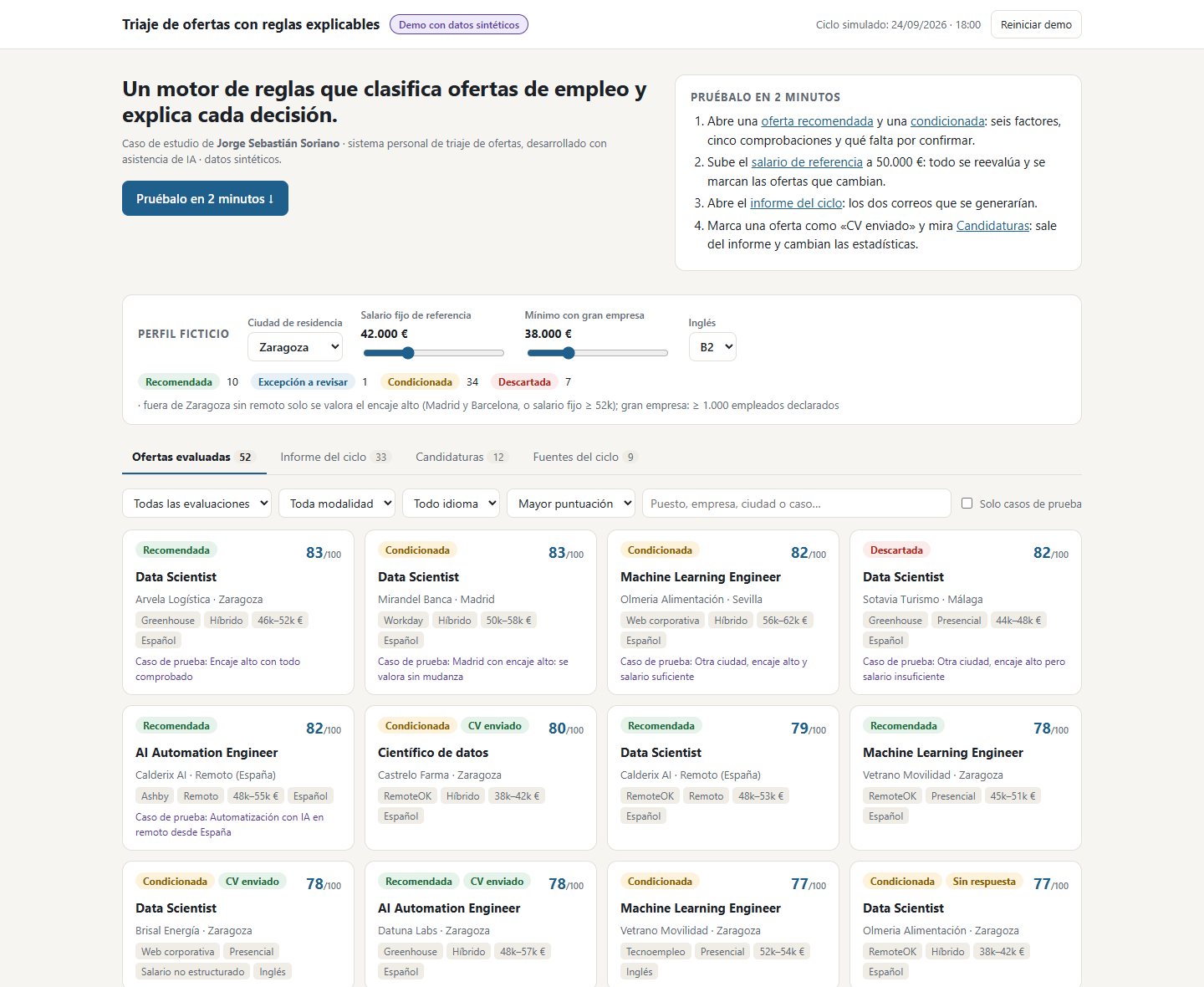
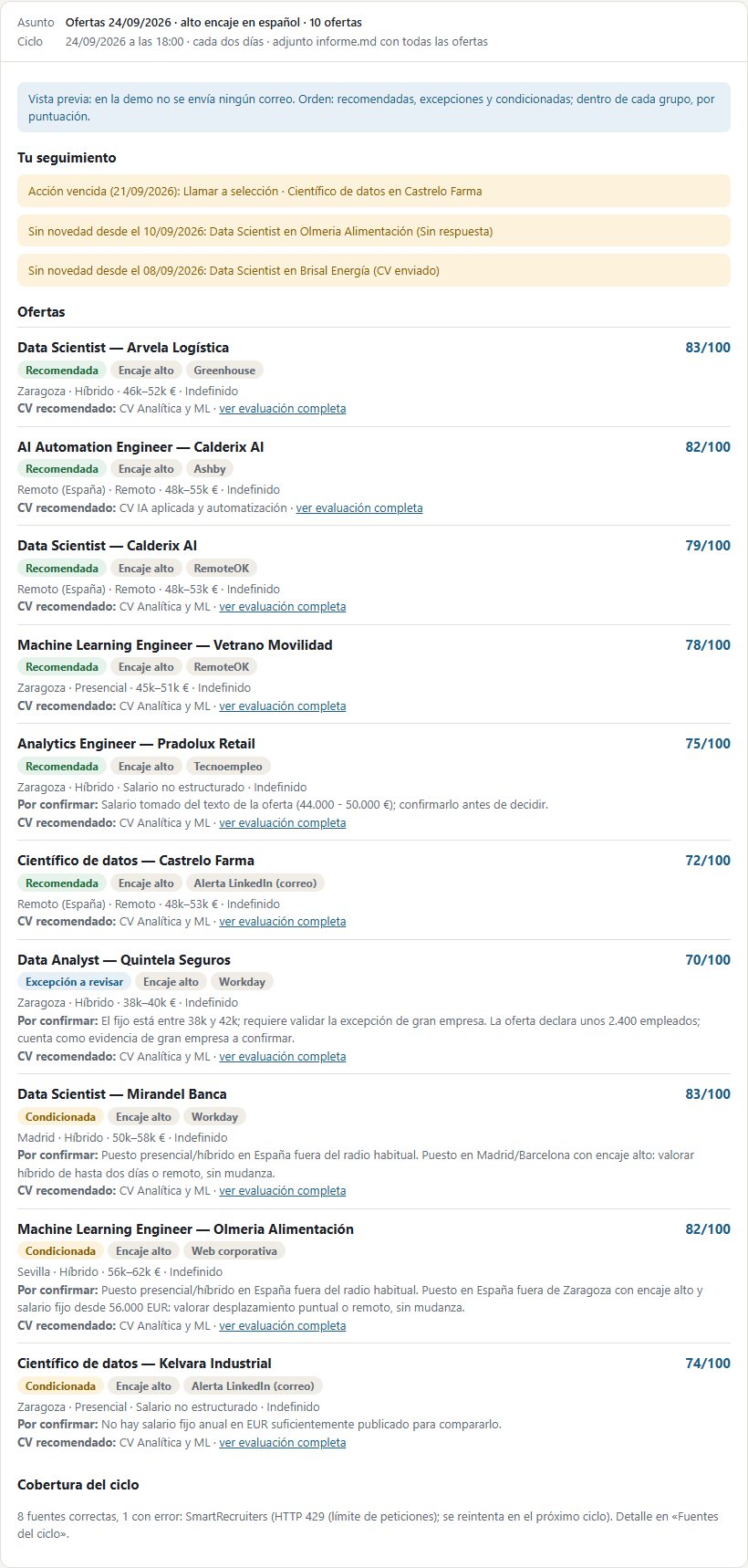
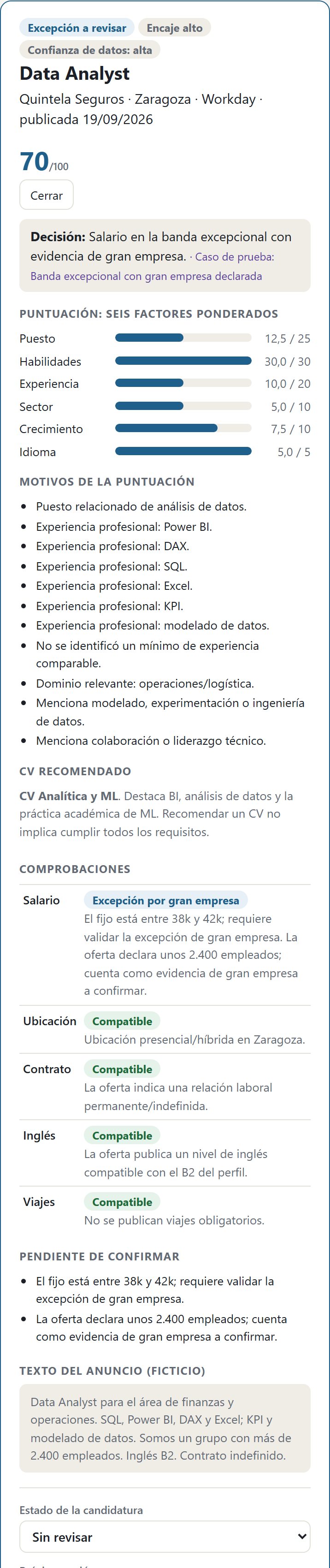
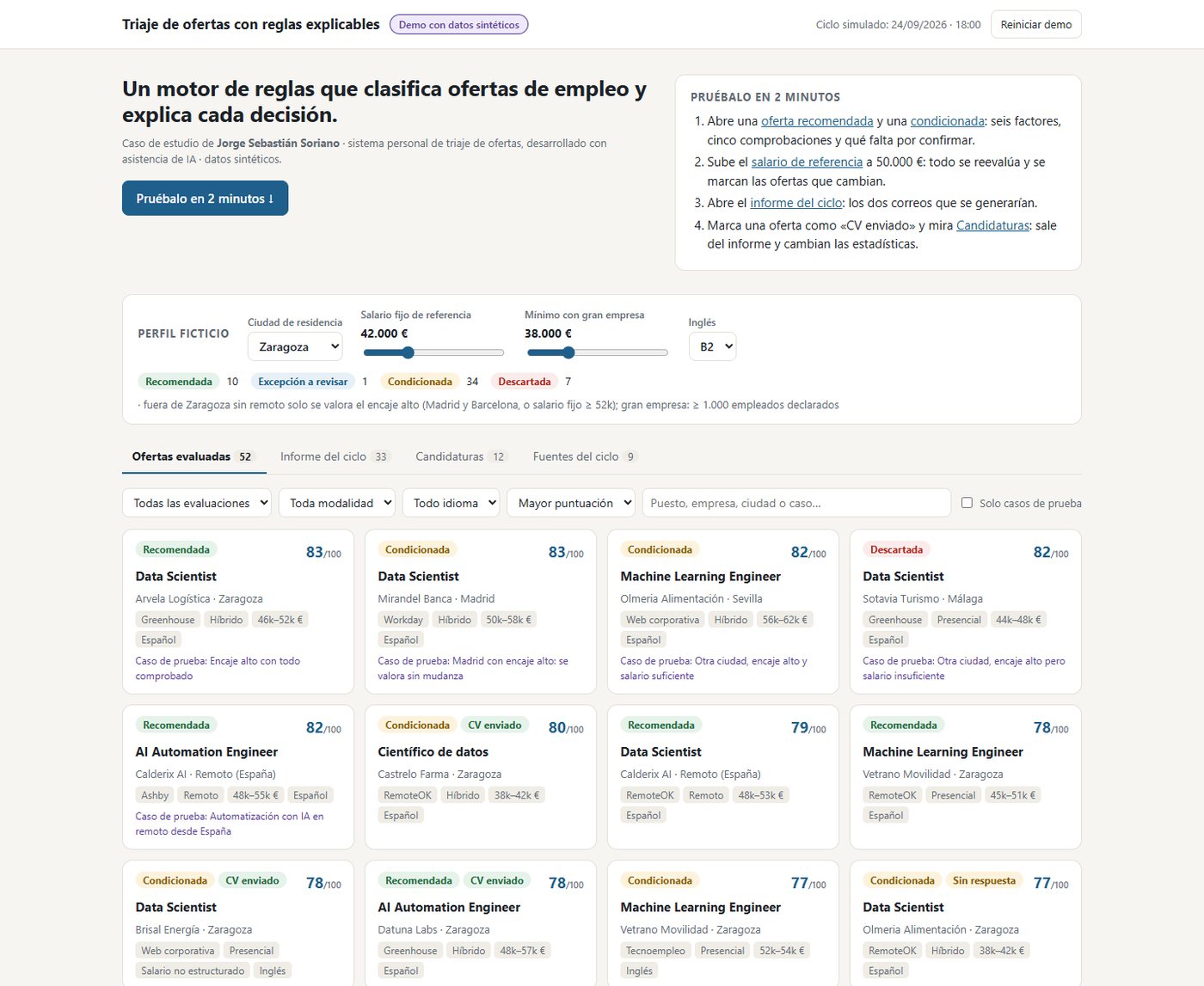
Each offer gets a score from 0 to 100 with its reasons, five independent checks (salary, location, contract, English and travel) and a status. The report sorts first by status and then by score.
Why an offer ends up conditional
If an ad does not state a requirement, that does not mean it is met: it is marked “to be confirmed”. And when there is a contradiction, the engine does not keep the most favourable value.
- Six weighted factors: role (25), skills (30), experience (20), sector (10), growth (10) and language (5).
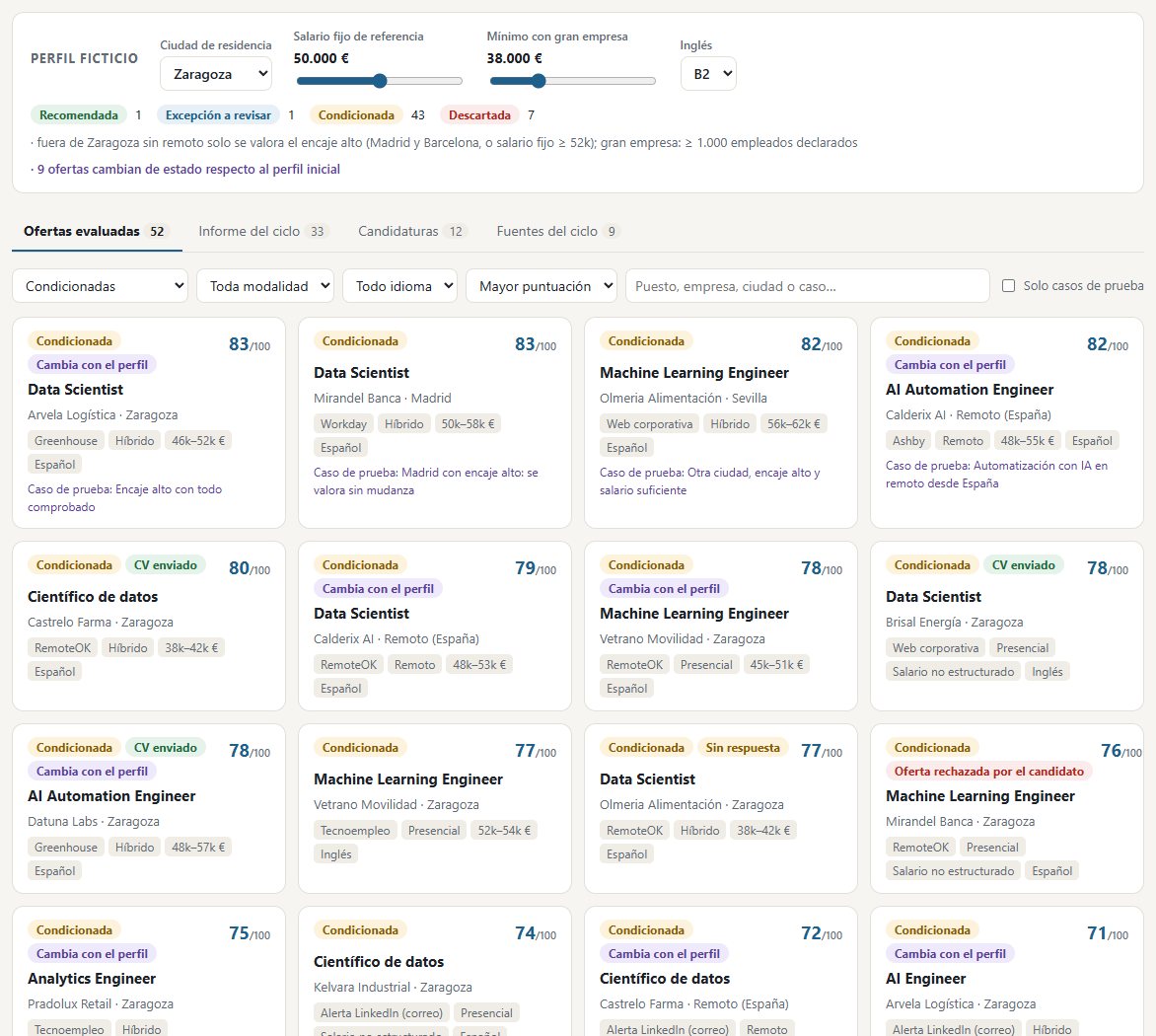
- Statuses separate from the score. An offer with 83 points can end up conditional if a decisive detail is missing.
- Salary read with care. A figure in the text only counts if it sits next to salary vocabulary and falls within a plausible annual range. Variable pay does not count as fixed.
- Rules instead of a model. There are few cases and every decision has consequences. I prefer rules that can be read, tested and discussed.
What it does not do
- It does not send applications or write to the mailbox: email is read in read-only mode.
- It only uses public job board APIs, RSS and email alerts. It does not access pages that require a login.
- The dashboard is only accessible from the machine itself, with a backup before every cycle.
What is real and what is demo
| Part | In the demo | Detail |
|---|---|---|
| Offers, companies and salaries | Synthetic | 52 made-up ads; 22 are deliberate test cases. |
| Candidate profile and applications | Synthetic | Fictitious: they are not the author's criteria. |
| Assessment engine | Real | A JavaScript recreation of the original logic. |
| Original code, database and emails | Not included | Not published. |
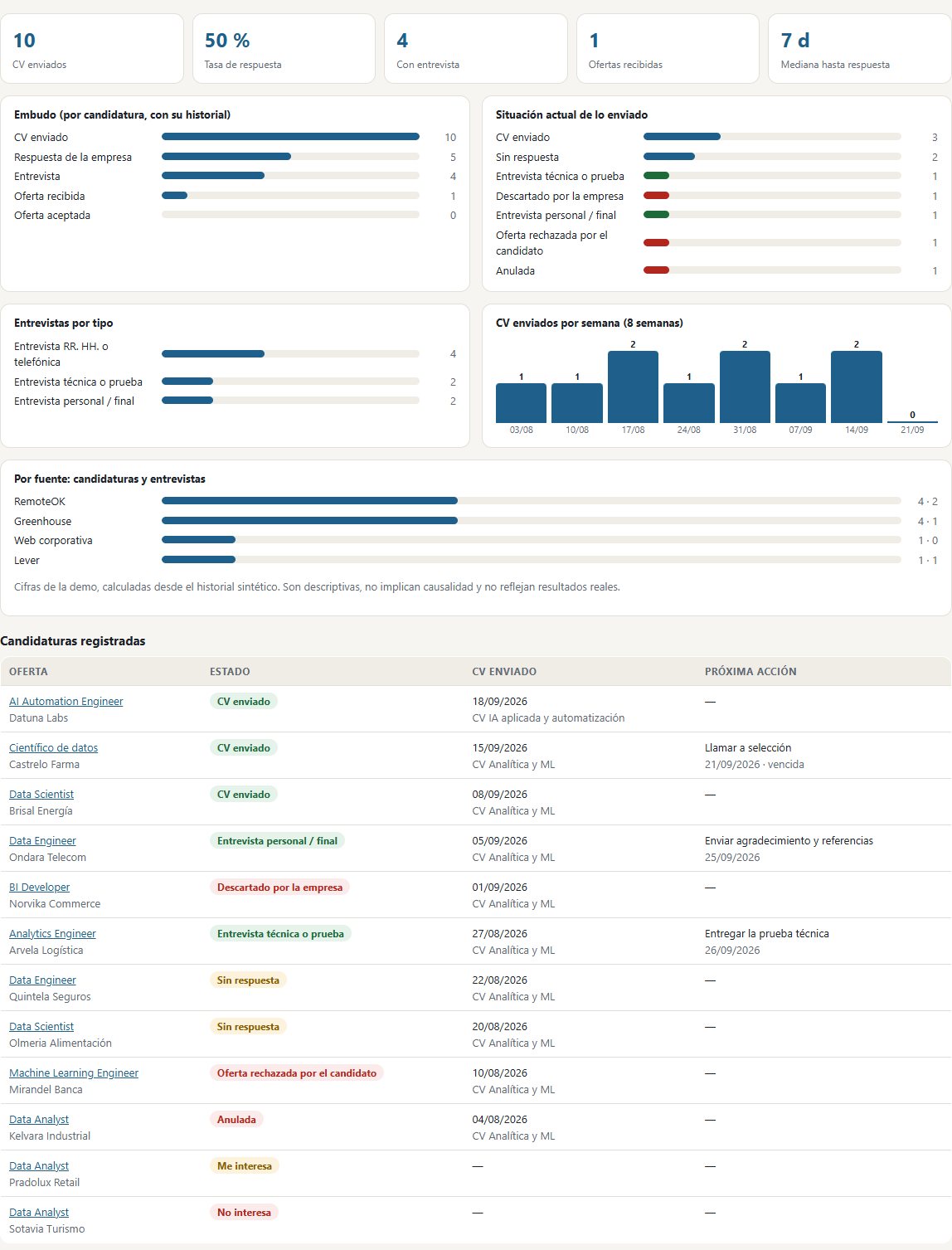
Results
Limitations and next steps
- Skill detection is vocabulary-based: it recognises mentions, not the level required.
- Next step: measure which recommended offers turn out to be interesting and adjust the weights with that data.
Demo screenshots
All with synthetic data. The demo interface is in Spanish.